Interceptor Drones: Engineering a 500+ km/h High-Speed FPV Drone
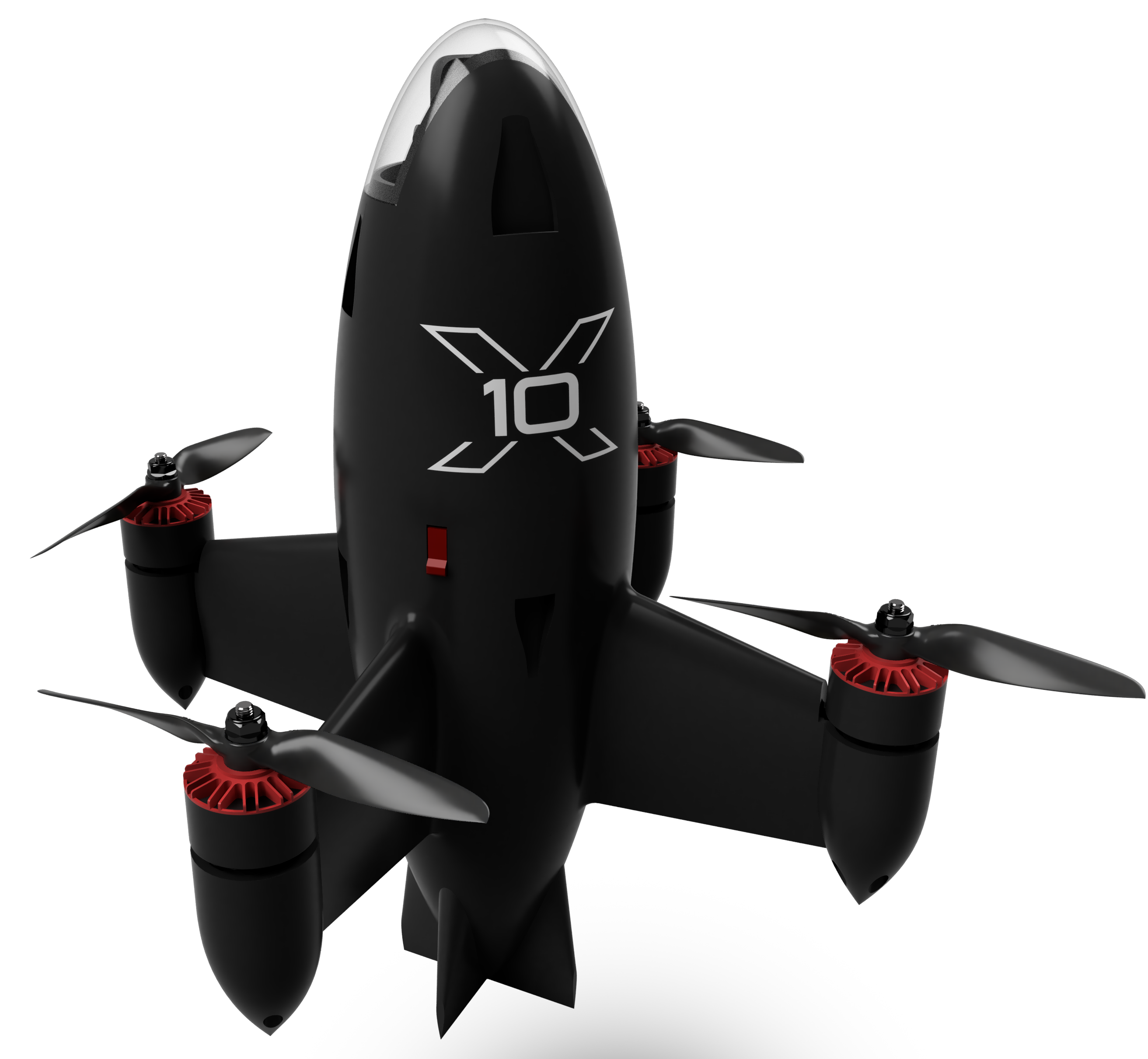
Rocket-shaped drones, most often called interceptor or high-speed drones, have not only revolutionized the war in Ukraine but also sparked a global competition to build the fastest electric vehicle on earth, reaching speeds of up to 700km/h. In this post, we'll take a look at the components and engineering behind these drones through the example of the 10x High-Speed Drone.
Components Overview
Component | Part |
|---|---|
Frame | 3D-printed PA6-CF + PLA (three-piece, twist-lock) |
Motors | VELOX V3120 700KV |
Propellers | 7″ APC (high pitch) |
ESC | APD F3[X] 120A |
Battery | 12S (2× SMC Racing 6S 1600mAh) |
PDB | MATEK FCHUB-12S |
Flight controller | Custom STM32H743 |
Video | DJI O4 Pro Air Unit |
Radio | ExpressLRS (ELRS) |
Outer Frame
An aerodynamic airframe is what makes high speeds possible. The main idea behind the rocket shape is to stack components vertically, minimizing the frontal profile area.
The frame on this drone is completely 3D printed from PA6-CF and PLA. Compared to most drones, it doesn't have a carbon fibre base plate. To still maintain a good vibration profile, we made the arm profile quite long and printed the arms with a high-density gyroid infill. Also NACA ducts are used to channel airflow along important components like the ESCs and the VTX. The frame is separated into three pieces, which connect via a twist-lock mechanism.
Motors and Props
The motors used are the VELOX V3120 700KV paired with high pitch 7" APC props.
ESCs
The ESC is the part that makes or breaks the system. Running 3120 motors with high-pitch props causes severe voltage spikes and can pull currents of up to per ESC. The 120F3[X] ESC by APD is the common choice among world-record attempts, as it doesn't run open-source software like AM32, which seemed to cause major issues such as overheating and desyncs on these builds. Instead, they run APD's own firmware, which appears to be far more resilient against the harsh conditions it's put under.
For the ESC to work, a lot of extra capacitance is needed to deliver the short-term energy bursts and filter out voltage spikes. That's why we developed a dedicated capacitor PCB carrying two capacitors and a TVS diode. Also the additional PCB helps mounting the ESC to the inner frame.
Battery
While normal FPV drones usually run on 6S LiPo batteries, on high-speed drones we aim for higher voltages like 12S giving us more power at the same current. 12S LiPos have always been a thing in the RC world, but to go this fast you need LiPos with very high discharge rates, which most standard packs can't deliver. 6S FPV packs are optimized for high discharge rates, which makes them perfect for building your own 12S pack.
The SMC Racing 6S 1600 mAh is one of these packs and can be connected in series to make a high-discharge 12S pack.
PDB
To distribute the battery current to the four ESCs, we use the MATEK FCHUB-12S power distribution board, which includes a 12 V BEC for powering the flight controller. Also here we have another for further filtering.
Flight Controller
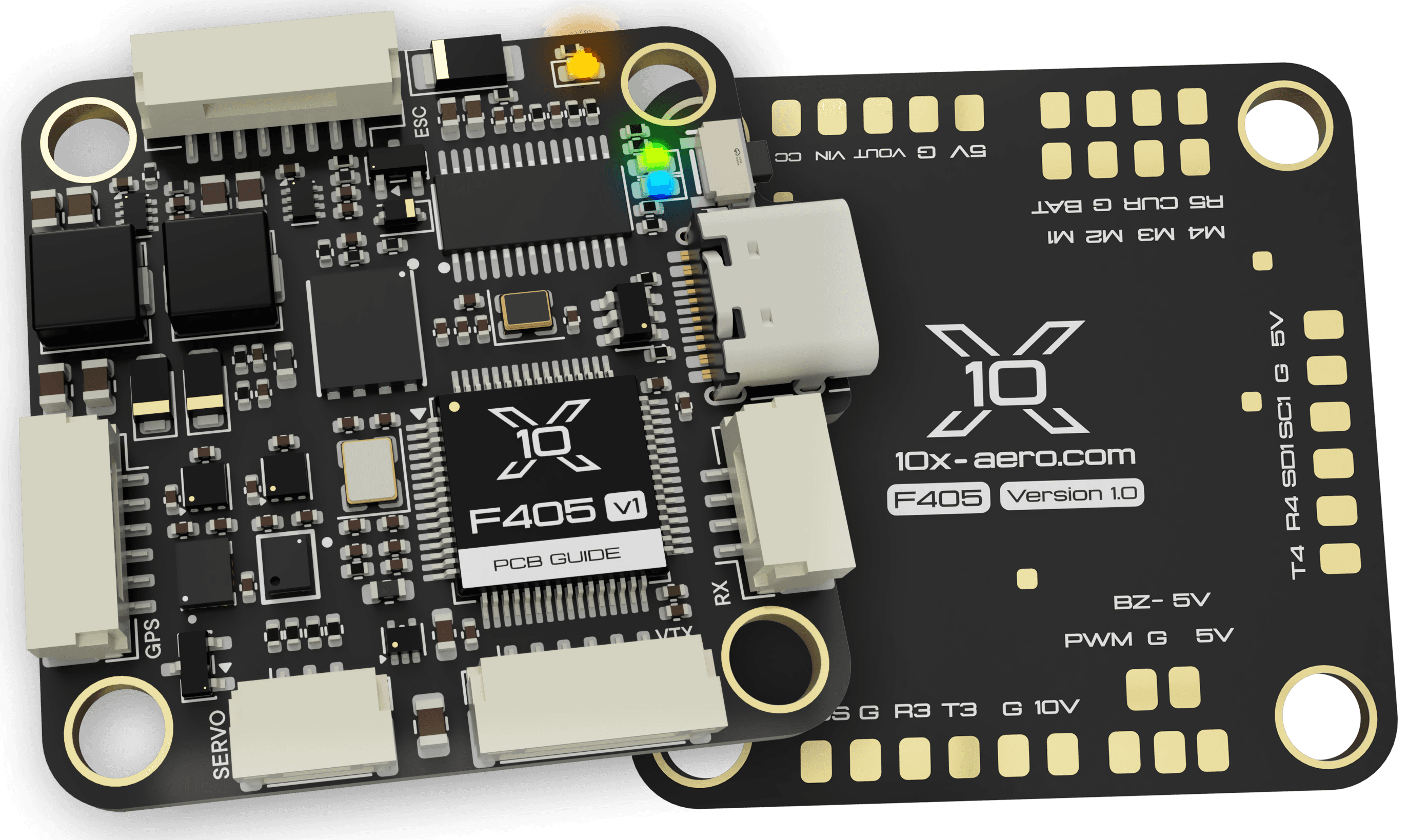
The flight controllers on these builds are no different from standard FPV flight controllers. Our build uses a custom-designed flight controller specifically optimized for a completely solderless design using JST-GH connectors.
Radio and Video System
This drone uses a standard ELRS radio module and a DJI O4 Pro Air Unit. The camera is mounted on a one-axis gimbal, giving the pilot the option to adjust the camera angle according to the flight orientation, which is very helpful for take-off and landing.
GPS
The GPS is mounted on the camera, making it rotate with the gimbal so that it always faces upwards, maintaining a good connection to the satellites.
Inner Frame
All the inner components are mounted to an inner frame, also printed from PA6-CF, making it stiff enough to mount the flight controller higher up.
High-Speed vs Defense Interceptor Drones
While the current speedrun record lies a little under , interceptors used in Ukraine only fly at roughly half that speed. The main reason for this is that the drones built for world-record attempts are purely engineered for speed, while interceptors need to incorporate functional parts like bigger external antennas, additional compute modules, and warheads filled with explosives. These make the quad heavier and increase drag, either directly or indirectly due to a larger frame.
Another major factor is that interceptors are often built to have a certain loitering capacity, which involves using higher-capacity batteries. The battery budget on world-record attempts is very tight, meaning that by the time top speed is reached, the battery is already almost fully drained.
Watch the full build video and gain more insight into this build